


7th Series Rifle Chassis by KPYK
- 6 hours ago
- 4 min read
Amidst the diversity of small arms in modern warfare, the role of precision rifles remains a hot topic. Some claim the era of snipers is over, while others agree that under certain conditions, a sniper can be a uniquely valuable combat asset.
The fact that they are rarely deployed in current conditions does not mean there is no need for development. Indeed, the desire to improve bolt-action rifles became the driving force for this product line in KPYK's history. How did it happen? Let's dive in and take a look.
7th Series - the inception
In a galaxy far, far away, many, many years ago… Alright, jokes aside — just like with many of our other products, the primary catalyst for the appearance of KPYK chassis systems was necessity.
In 2015, the stars aligned perfectly. First, Pavlo — our chief designer and weapons expert, whom you’ve likely seen in our videos — joined the team. He was the first to pitch the idea of manufacturing chassis systems for bolt-action rifles. Just a few weeks later, volunteers and military personnel reached out to us with that exact need.

They were talking about Mosin-Nagant rifles, which were sitting in storage facilities at the time and being considered as weapons for designated marksmen (DM) within the newly emerging Territorial Defense Forces (TDF). The idea was to modernize this bolt-action platform, which was outdated even by 2015 standards. However, at a time when no country in the world wanted to sell us weapons — not even the simplest small arms — this idea was far from bad.
Scrolling through these photos, you will see the first handguards, trigger guards, buttstocks, and the earliest versions of the first complete Mosin-Nagant chassis systems by KPYK. Looking back more than 10 years, the evolution of these familiar chassis systems becomes obvious and is truly impressive.



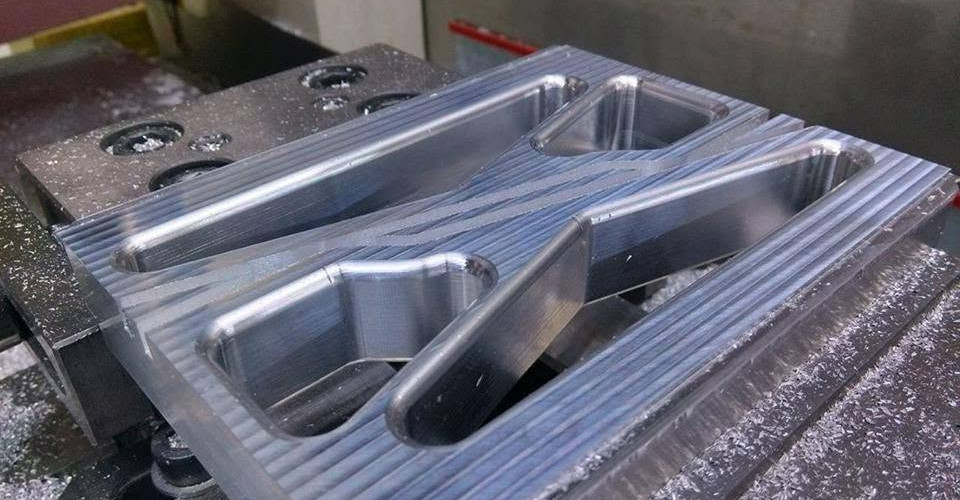


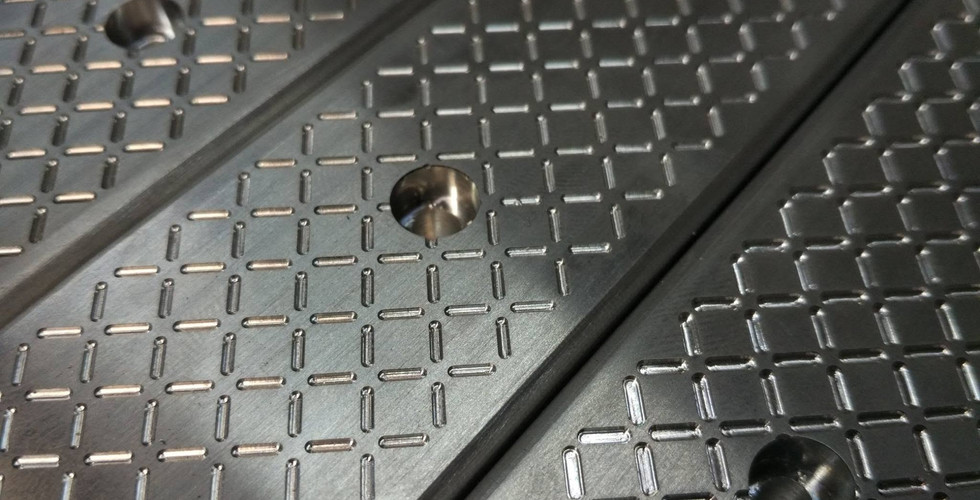
This necessity laid the groundwork for two modernization variants developed by Ukrainian companies: the first was created by Zbroyar, and the second was made by us. Truth be told, there is a massive difference between that first version and the one available on the market today. Refining the chassis and the entire rifle system to the state you see now took over a year.
The Mosin-Nagant’s failure to meet contemporary precision shooting requirements was obvious, even to someone far removed from firearms. That is why the KPYK team developed our first 7th Series chassis — the CRC 7U001. This chassis system for the Mosin-Nagant significantly modernized the vintage rifle, allowing it to serve as a stepping stone toward modern platforms for Ukrainian snipers and marksmen.
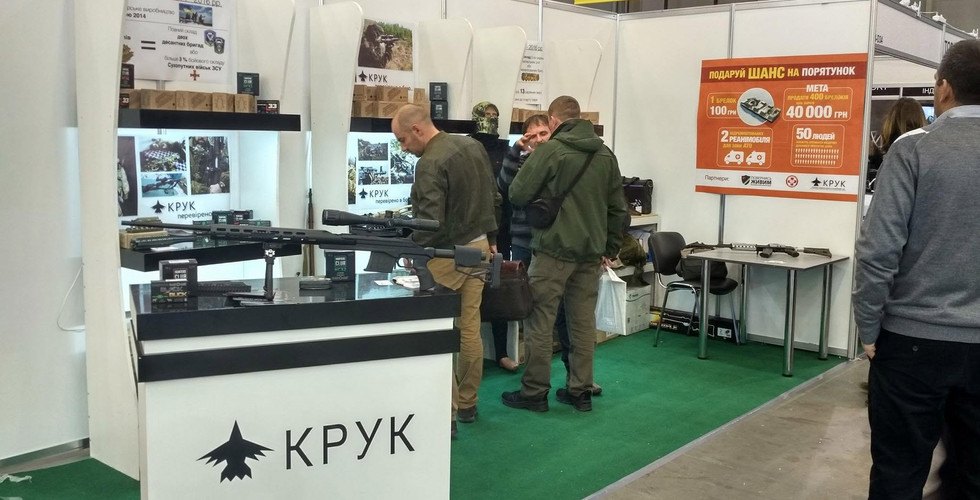
The world first saw the prototype of the CRC 7U001 chassis at the 'Arms and Security' exhibition in 2015:

And by the following year, the KPYK-fitted Mosin-Nagant could be seen at the 'Arms and Security 2016' exhibition, featuring our brand-new adjustable CRC 5001 buttstock and a full-length M-LOK handguard.


Why the "7th Series" and Where Are the Previous Ones?
We often refer to our precision rifle products as the "7th Series," but what does that mean? Did 6th or, say, 8th Series chassis systems ever exist?
The answer is no. At least, not yet.
Generally, this is our internal product coding system used to designate product families:
1st Series: Handguards, such as the 1AR060 or 1U004A;
2nd Series: Optic mounts and rails;
3rd Series: Muzzle devices, currently represented by the Mini-Zhaba and Hypno-Zhaba.
And so on, all the way up to the 7th Series — chassis systems and handguards for bolt-action rifles.
What Is Available Now?
Although it all started with a chassis for the Mosin-Nagant, it didn't stop there. Leveraging the experience gained during R&D and manufacturing, we expanded the lineup to more relevant and modern platforms — Remington, Howa, and Sauer.

These chassis systems are available for Short Action receiver footprints (for cartridges up to 2.8 inches in overall length, such as the .308 Win and 6.5 Creedmoor) and Long Action footprints (over 2.8 inches — such as the .30-06 and .300 Win Mag). The Remington lineup also features a left-handed action option.

Every KPYK chassis enables detachable box magazine capabilities — utilizing ProMag magazines for the Mosin-Nagant and AICS-pattern magazines for the other platforms. The handguards feature an octagonal M-LOK attachment interface, offering plenty of real estate to mount and configure accessories exactly the way you prefer.


Specifically for KPYK chassis systems, we developed the CRC 5001 buttstock. It is fully adjustable for length of pull, buttpad height, and cheek riser height. It can also be fitted with a bag rider or a monopod to enhance stability when shooting.

It pairs perfectly with our CRC 9038 folding adapter, ensuring smooth and reliable stock folding for transportation with zero play or extra effort.
The buttstock attachment interface on our 7th Series chassis matches the dimensions and threads of a standard AR buffer tube, meaning you retain the option to use third-party stocks if desired.
What’s Next?
Even though military sniping at the time of writing — summer 2026 — is highly situational and limited, we are not stopping the development of our rifle products.
We have planned lineup expansions to ensure compatibility with receivers from other manufacturers, including Tikka, Ruger, and Mauser. Most importantly, this will bring a qualitative evolution to the chassis systems themselves, driven by the feedback of military shooters and competitive marksmen regarding what a modern rifle needs: integrated ARCA rails, improved magazine well ergonomics, and greater modularity in choosing chassis components.
Additionally, the 6th and 8th product series for precision shooting will make their debut.
Stay tuned for updates on our 7th Series lineup and its evolution on our social media and this blog, where we aim to build a community and foster a dialogue with you — our readers and shooters.
What does your ideal precision chassis look like? Let us know in the comments!


Comments